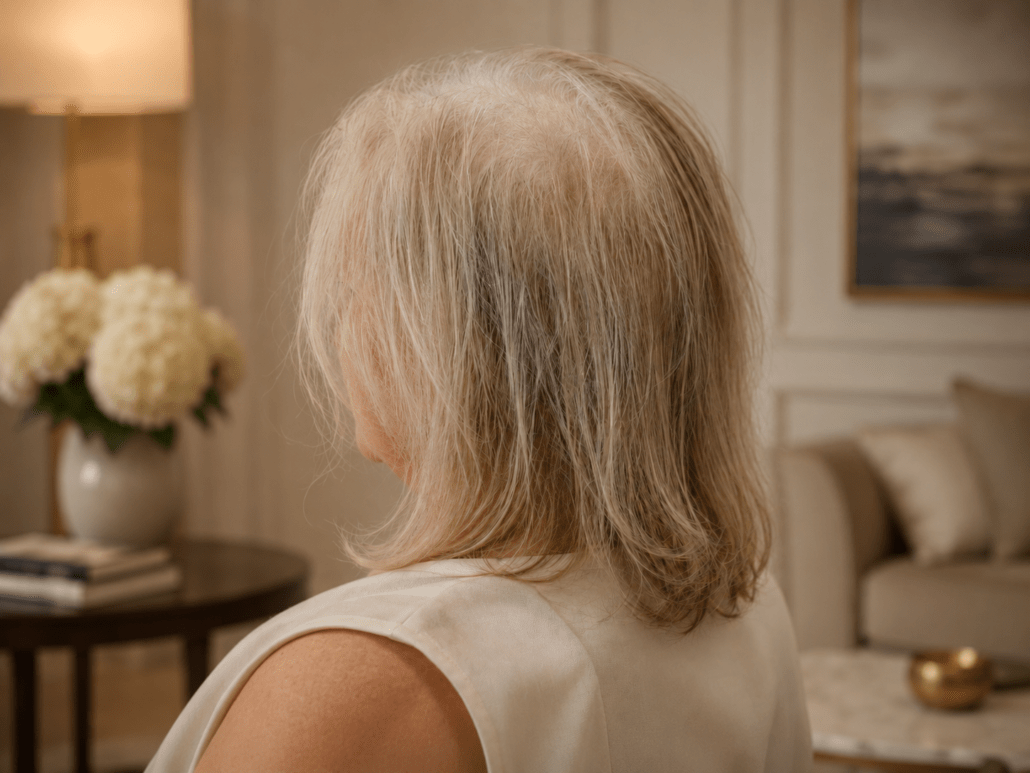
Why Does Hair Get Thinner and Duller as We Age?
Updated: August 12, 2026
By Robert Cartier, Salon Cartier, Walnut Creek, California
One of the questions I hear most often is, why does hair get thinner and duller as we age?
I hear some version of that from clients all the time.
Maybe your hair feels thinner than it did five or ten years ago. Maybe it has lost some of its shine. It may feel drier, flatter, more fragile, or simply not move the way it once did.
And this isn’t just something women notice. I hear it from men, too.
So why does hair get thinner and duller as we age?
The short answer is that our hair changes along with the rest of us. Hair growth can slow with age, individual strands may become finer or more fragile. Changes in moisture, texture, scalp condition, hormones, medications, styling habits, and years of chemical or heat exposure can all affect how healthy our hair looks and feels.
The good news is that while we can’t stop the aging process, there’s quite a bit we can do to help hair look softer, shinier, stronger, fuller, and more vibrant.
And in my experience, one of the most important places to start is with the health and condition of both the hair and the scalp.
Why Does Hair Get Thinner as We Get Older?
One of the most common changes people notice with age is a loss of density.
According to the American Academy of Dermatology, hair growth tends to slow as we get older, and many people experience some degree of age-related hair loss or thinning.
But there is an important distinction I make with clients.
Fine hair and thinning hair are not necessarily the same thing.
Fine hair describes the diameter of each individual strand. Thinning hair usually refers to having fewer hairs or noticing a decrease in overall density.
You can have very fine hair and a lot of it. You can also have thicker individual strands while experiencing thinning.
That distinction matters because the way I cut, style, and recommend products for fine hair can be very different from what I would recommend for someone experiencing actual hair loss.
We have a more detailed guide about this on the Salon Cartier website: Why Fine Hair Needs a Different Cutting Technique.
Why Does Aging Hair Lose Its Shine?
When clients tell me their hair looks “older,” they aren’t always talking about gray hair.
Often, they’re talking about shine, softness and movement.
Healthy-looking hair reflects light. When the outer surface of the hair becomes rougher, dry, damaged, or coated with the wrong products, light doesn’t reflect from it as evenly.
The result can be hair that looks dull even when the color itself is beautiful.
Years of coloring, highlighting, hot tools, sun exposure, brushing, and everyday wear can also affect the condition of the hair.
That doesn’t mean you have to stop coloring your hair or put away your blow-dryer.
It means your hair care should change as your hair changes.
The shampoo, conditioner, styling products, haircut, or treatment that worked beautifully for you at 35 may not necessarily be what your hair needs at 55 or 70.
Does Scalp Health Affect How Your Hair Looks?
I think the scalp is one of the most overlooked parts of a good hair-care routine.
We spend so much time thinking about the hair we can see that we sometimes forget where it starts.
Your scalp is skin, and keeping it clean and comfortable is an important part of good hair care.
That doesn’t mean every person needs an elaborate “scalp treatment.” It also doesn’t mean a salon product can cure medical hair loss.
What it does mean is that I pay attention to the scalp as well as the hair when I’m evaluating what a client needs.
Excessive product buildup, dryness, irritation, or using products that aren’t well suited to your hair can affect how your hair looks and feels.
If I see something on the scalp that concerns me, or a client is experiencing sudden or significant hair loss, that’s also when I recommend talking with a dermatologist or medical professional rather than trying to solve a medical issue with a cosmetic product.
Why Can Heavy Hair Treatments Make Fine Hair Look Worse?
This is a big one.
People often assume that if their hair feels dry or damaged, the answer is simply more moisture, more conditioner, more oil, more treatment.
Sometimes that works beautifully.
Sometimes it leaves the hair looking flatter than when we started.
If your hair is fine, aging, or naturally lacking body, a heavy treatment can coat the hair and take away the movement you’re trying to restore.
That’s why I’m always looking for the balance between conditioning the hair and preserving movement.
I want hair to feel soft without feeling coated.
I want shine without grease.
I want the hair to move.
And I want it to still feel like your hair.
What Can You Do to Make Aging Hair Look Healthier?
When clients ask me why hair gets thinner and duller as we age, there usually isn’t just one reason.
But these are some of the things I look at when a client tells me their hair doesn’t look as healthy as it used to.
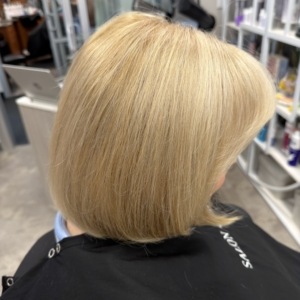
1. Start With the Right Haircut
A haircut can make an enormous difference in how full and healthy hair appears.
With finer or less dense hair, removing too much weight in the wrong places can make the ends look thinner.
The right shape can create movement, preserve visual density, and work with the hair you have rather than fighting it.
2. Use Products That Match Your Hair Today
Don’t stay loyal to a product simply because you’ve used it for 20 years.
Your hair may have changed.
Look for products that give you the conditioning you need without unnecessarily weighing your hair down.
3. Be Careful With Heat
Hot tools can be wonderful styling tools, but more heat isn’t always better.
Using appropriate temperatures, heat protection, and good technique can help reduce unnecessary stress on the hair.
The American Academy of Dermatology also recommends gentle hair care and limiting excessive heat when hair is fragile or thinning.
4. Pay Attention to Changes
Gradual changes in hair are common.
Sudden changes deserve more attention.
If you’re experiencing noticeable shedding, bald spots, scalp discomfort, or a significant change in density, I recommend speaking with a dermatologist or your physician.
A hairstylist can help your hair look its best, but we shouldn’t pretend a salon treatment is a substitute for diagnosing a medical cause of hair loss.
5. Treat the Hair Without Smothering It
This is where professional treatments can be useful.
The goal isn’t just to make hair feel heavily conditioned.
For many of my clients, the goal is healthier-looking hair with softness, shine and movement.
The Treatment I’m Excited About Right Now
One hair-care line I’ve been especially excited about lately is ACTIIV, particularly the Recover collection for fine and thinning hair.
ACTIIV takes a scalp-first approach, which fits closely with what I see behind the chair. Their products are designed to support the scalp while helping hair look fuller, stronger, and healthier without weighing finer hair down.
According to ACTIIV, the Recover collection was developed specifically for fine, fragile, and thinning hair.
What I like most is how lightweight it feels.
I want hair to have softness, shine, and movement without feeling flat or coated. For clients who feel their hair has become thinner, weaker, or less vibrant over time, ACTIIV gives me another great option to recommend.
As always, if you’re experiencing sudden or significant hair loss, I recommend speaking with a dermatologist. But for improving the look and feel of fine or aging hair, I’ve been very impressed with ACTIIV.
Can Hair Look More Youthful Without Changing the Color?
Absolutely.
When we think about making hair look more youthful, people often assume that means covering gray hair.
It doesn’t have to.
Some of the most beautiful gray and silver hair I work with looks youthful because it has a great shape, healthy-looking shine, softness, and movement.
On the other hand, even freshly colored hair can look older if it appears dry, flat or overly processed.
For me, “youthful hair” isn’t about trying to look 25.
It’s about making the hair you have now look healthy, intentional and alive.
What Hair Treatments Are Best for Women Over 50?
This is a question I hear frequently, and I don’t think the answer should be based on age alone.
Two women who are both 60 can have completely different hair.
One may have thick, coarse, dry hair.
Another may have fine, fragile hair that gets weighed down easily.
One may color every four weeks.
Another may have completely natural silver hair.
That’s why I don’t believe in saying, “You’re over 50, so you need this product.”
I look at:
- Hair density
- Individual strand thickness
- Texture
- Condition
- Scalp condition
- Chemical history
- Heat styling habits
- Current haircut
- The client’s daily routine
Then we decide what makes sense.
You can also see more of the cutting, coloring, and hair-care options we offer on our Salon Cartier services page.
When Should You See a Dermatologist About Thinning Hair?
If your concern is primarily that your hair looks dull, dry or flat, your hairstylist may be able to help tremendously.
But if you are experiencing sudden shedding, significant thinning, bald patches, itching, pain, inflammation, or another unusual scalp change, it’s worth speaking with a dermatologist.
Hair loss can have many causes, and figuring out the reason matters.
That’s another reason I’m careful with the word “treatment.”
There is a difference between a professional cosmetic treatment that improves how the hair looks and feels and a medical treatment intended to address hair loss.
Knowing the difference helps us make better decisions for your hair.
Frequently Asked Questions About Thinning and Aging Hair
Why does hair get thinner and duller as we age?
Hair often grows more slowly and becomes finer with age, while dryness, heat, chemical processing, and texture changes can make it look duller. The right haircut, products, and styling routine can help hair look fuller, shinier, and healthier.
Can scalp health affect my hair?
The scalp is the skin from which your hair grows, so good scalp care is an important part of overall hair care. Persistent irritation, scaling, sores or unusual hair loss should be evaluated by a dermatologist.
Can a hair treatment make thinning hair grow back?
A cosmetic salon treatment should not be presented as a cure for hair loss. Professional treatments can help improve the condition, softness, strength, shine or appearance of existing hair, but medical hair loss should be discussed with a qualified healthcare professional.
What is the best treatment for aging hair that gets weighed down easily?
There isn’t one best treatment for everyone. Fine or low-density hair often benefits from lightweight products that improve conditioning without leaving a heavy coating. Your stylist can help determine what works with your particular hair texture and condition.
How can I make gray hair look younger and healthier?
Healthy-looking gray hair usually comes down to shape, shine, moisture balance, appropriate products and a haircut that works with your texture. You don’t necessarily need to cover your gray to make your hair look vibrant.
Is the Framesi Morphosis Restructure Molecular Booster good for fine hair?
I’ve been pleased with it on many of my clients because it provides softness and shine while allowing the hair to retain natural movement. That said, every head of hair is different, so I prefer to evaluate your hair before recommending any particular product.
Ready to Love Your Hair Again?
If you’ve been looking in the mirror lately and thinking, “My hair just isn’t what it used to be,” bring it up at your next appointment.
Sometimes the answer is a different haircut.
Sometimes it’s changing your home-care routine.
Sometimes it’s a professional treatment.
And sometimes it’s simply understanding what your hair needs now, rather than treating it the way you did years ago.
That’s what a good consultation is for.
At Salon Cartier Boutique Studio in Walnut Creek, Robin and I have spent decades helping clients adapt their hair as their lives, styles and needs change.
Click here if you’d like to see what we recommend for your hair, we’d love to see you.